
FDM materials.
Suited to the task.
From PLA and ASA to flexible materials: find a filament suited to your model and its operating conditions.
No matching material found. Try a different search term.
PLA
PLA
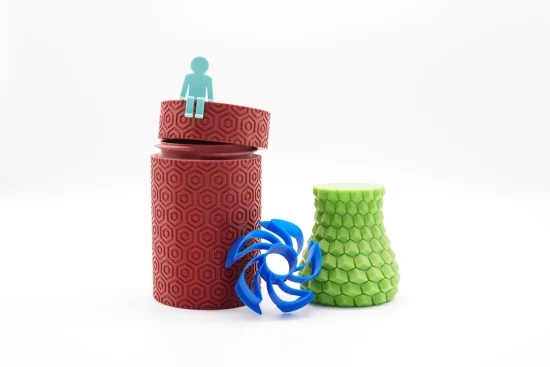
PLA (polylactic acid) is one of the most widely used 3D printing materials. Easy to print and inexpensive, it is a good starting material for learning 3D printing and suits many applications. PLA is derived from renewable plants such as corn and sugar cane and is biodegradable, making it one of the more environmentally friendly filaments available.
Education and research · Engineering · Design prototypes · Consumer electronics · Art and creative design
±0.3% (minimum ±0.2 mm)
Low cost · Stiffness and good strength · Good dimensional accuracy · Good durability · Art and creative design
Low heat resistance · Filament may become brittle and break · Not suitable outdoors in sunlight
Enquire about this materialPLA – WOOD
PLA – WOOD
PLA–WOOD filaments combine a PLA base with cork, wood dust or other derivatives, giving models the look and feel of wood. PLA comes from renewable plants such as corn and sugar cane and is biodegradable, making it one of the more environmentally friendly filaments available.
Design · Art and creative applications
±0.3% (minimum ±0.3 mm)
Attractive wood-textured surface · Aromatic, pleasant scent
Low heat resistance · Filament may become brittle and break · Not suitable outdoors in sunlight
Enquire about this materialABS
ABS
ABS (acrylonitrile butadiene styrene) is known for toughness and impact resistance, producing durable parts that withstand additional wear and use. LEGO bricks use it for the same reason. Its higher glass transition temperature allows it to withstand higher temperatures before deforming, making it useful for outdoor or high-temperature applications.
Industrial equipment and machinery · Injection moulding and moulds · Cars and motorcycles · Consumer electronics · Industrial components and tools
±0.3% (minimum ±0.2 mm)
±0.5% (minimum ±0.5 mm)
Low cost · Stiffness and good strength · Good dimensional accuracy · Good durability · Art and creative design
Good impact and wear resistance · Fast processing · Good heat resistance
Low heat resistance · Filament may become brittle and break · Not suitable outdoors in sunlight
Significant warping · Limited dimensional accuracy · Print layers likely visible
Enquire about this materialABS-ESD
ABS-ESD
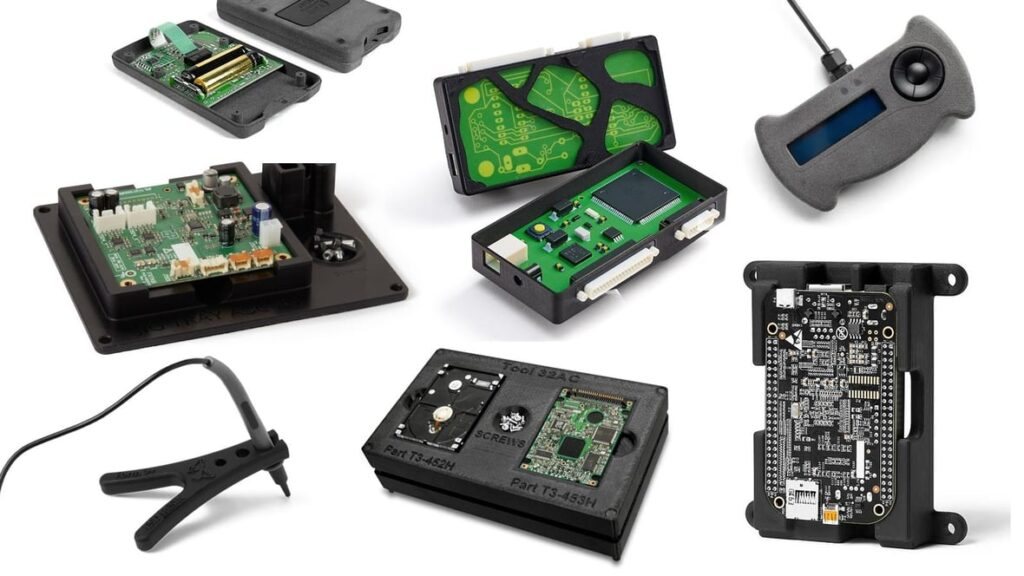
ABS–ESD (electrostatic discharge) protects or supports objects sensitive to electrostatic discharge. It is an antistatic material that conducts electricity, but not like a copper wire: it dissipates only what is needed to discharge static electricity. Its mechanical properties remain similar to standard ABS.
Electronics · Education and research · Industrial machinery · Injection moulding and moulds · Cars and motorcycles · Industrial components and tools
±0.5% (minimum ±0.5 mm)
Electrostatic discharge protection · Good impact and wear resistance · Fast processing · Good heat resistance
Significant warping · Limited dimensional accuracy · Print layers likely visible
Enquire about this materialPET-G
PET-G
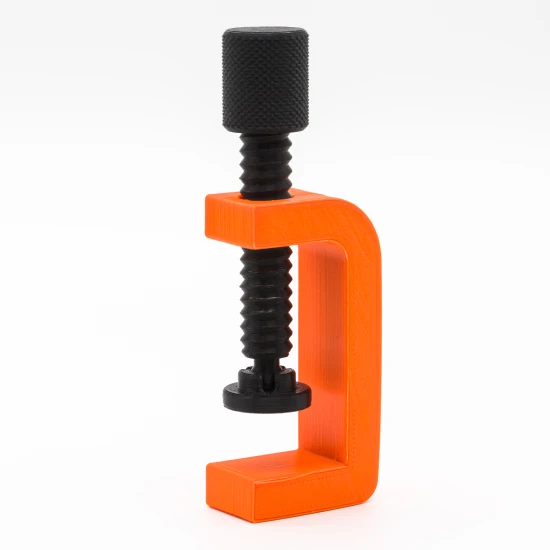
PETG is a glycol-modified version of polyethylene terephthalate (PET), commonly used for water bottles. It suits mechanical parts needing impact resistance and flexibility. Compared with PLA, this thermoplastic offers improved impact resistance and excellent chemical and moisture resistance. PETG can be sterilised.
Design prototypes · Jigs and fixtures · Transport · Industrial components and tools · Consumer electronics
±0.4% (minimum ±0.4 mm)
Chemical resistance · Moisture resistance · Good impact and wear resistance · Fast processing
Limited dimensional stability · Print layers likely visible · Stringing may leave thin hairs on the surface
Enquire about this materialTPU – FLEX
TPU – FLEX
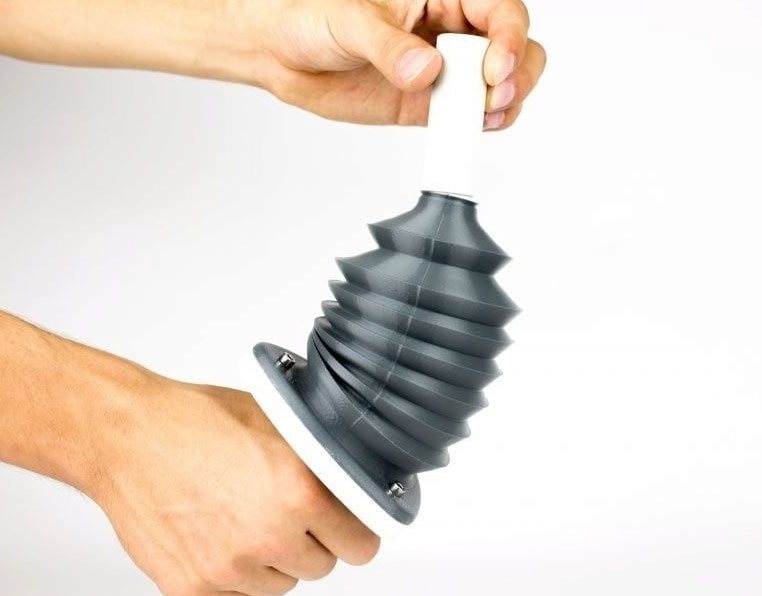
TPU (thermoplastic polyurethane) is a common elastic, rubber-like polymer suited to tubes, grips and seals. Slightly stiffer than many other flexible filaments, it is easier to manufacture and use. It combines medium strength with high flexibility and durability and withstands greater compressive and tensile forces than PLA and ABS. Flexibility depends on infill.
Insoles and inserts · Tubes and hoses · Jigs and fixtures · Industrial components and tools · End-use parts
±0.4% (minimum ±0.4 mm)
Flexible and soft · Excellent vibration damping · Long life · Good impact resistance
Difficult to print · Poor bridging · Possible blobs and stringing
Enquire about this materialTPE – FLEX
TPE – FLEX
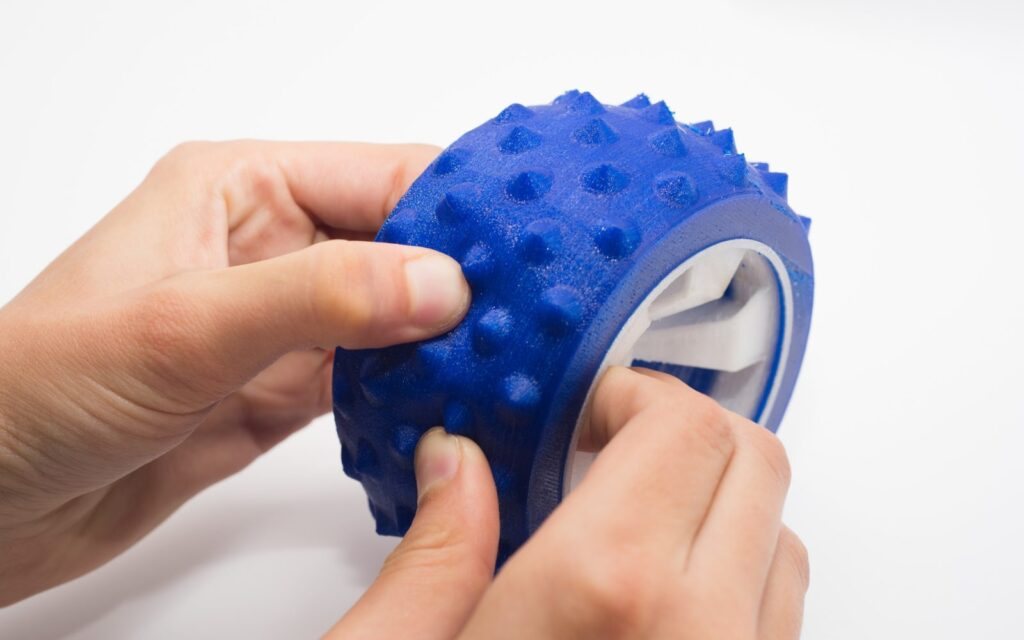
TPE (thermoplastic elastomers) are elastic plastics that deform like rubber and return to their original shape. Their flexible properties open up applications such as model tyres, flip-flops, toys, joints and machine parts needing flexibility. Flexibility depends on infill.
Model tyres · Insoles and inserts · Tubes and hoses · Jigs and fixtures · Industrial components and tools · End-use parts
±0.5% (minimum ±0.5 mm)
Flexible and soft · Excellent vibration damping · Long life · Good impact resistance
Significant warping · Limited dimensional accuracy · Print layers likely visible
Enquire about this materialASA
ASA
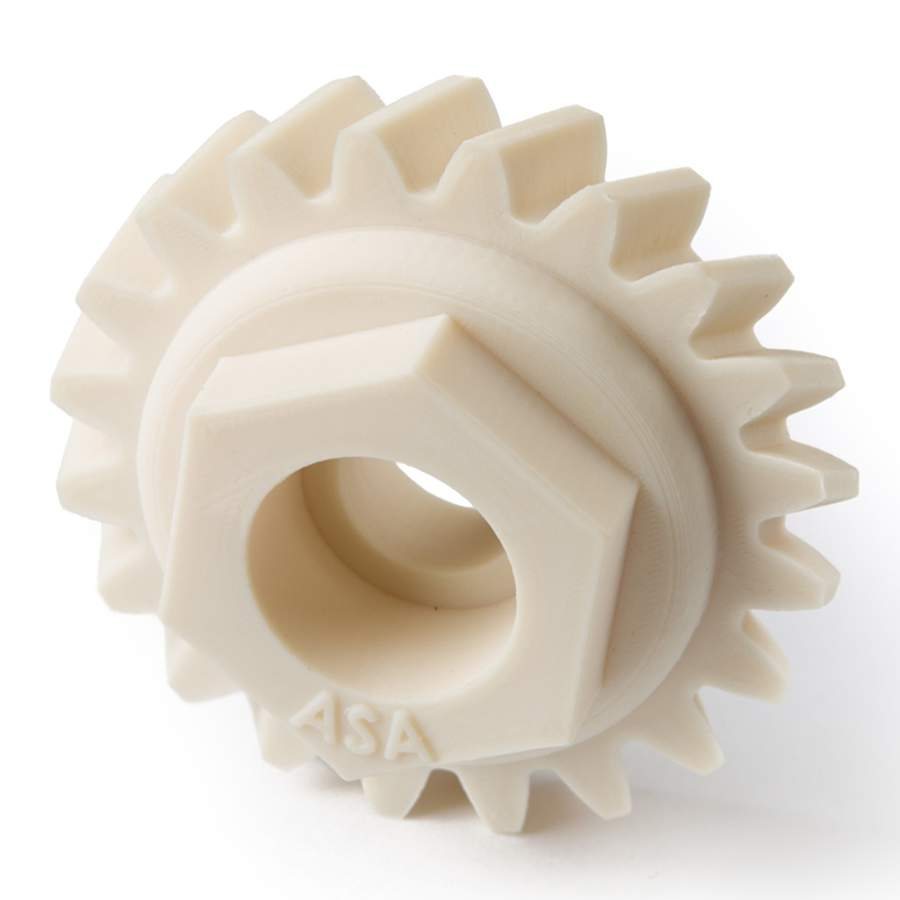
ASA (acrylic styrene acrylonitrile) has properties similar to ABS, with high impact, UV and temperature resistance, but is harder to print. Its superior resistance to UV and harsh weather often makes it an alternative to ABS outdoors.
Cars and motorcycles · Impact-resistant parts · Engineering · Consumer electronics · Spare parts
±0.4% (minimum ±0.4 mm)
High UV resistance · High impact and wear resistance · High glass transition temperature
Significant warping · Limited dimensional accuracy · Print layers likely visible
Enquire about this materialPP
PP
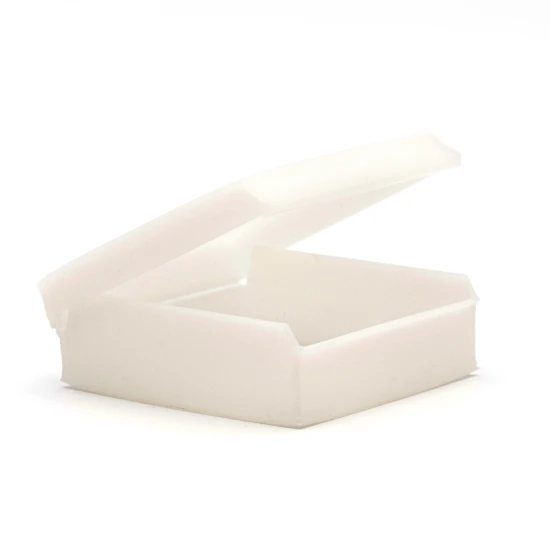
PP (polypropylene) offers good mechanical properties, chemical and thermal stability and low friction. Its low density suits lightweight design, from technical parts to customised decorative objects and toys. The world’s second most used plastic is rigid, lightweight and suitable for packaging and storage. It is tough, fatigue-resistant and durable, suiting semi-rigid functional prototypes with snap fits or moving hinges.
Packaging · Storage · Components · Custom decorative and art objects · Toys
±0.5% (minimum ±0.5 mm)
Good impact and fatigue resistance · Good heat resistance · Smooth surface
Significant warping · Difficult adhesion to the print bed and other adhesives
Enquire about this materialThese values come from our existing material overview and are for guidance. Suitability and binding requirements are clarified with your enquiry.
The right material.
Compare materials by technology and select them together.
The right finish.
These options depend on the material and part specifications.
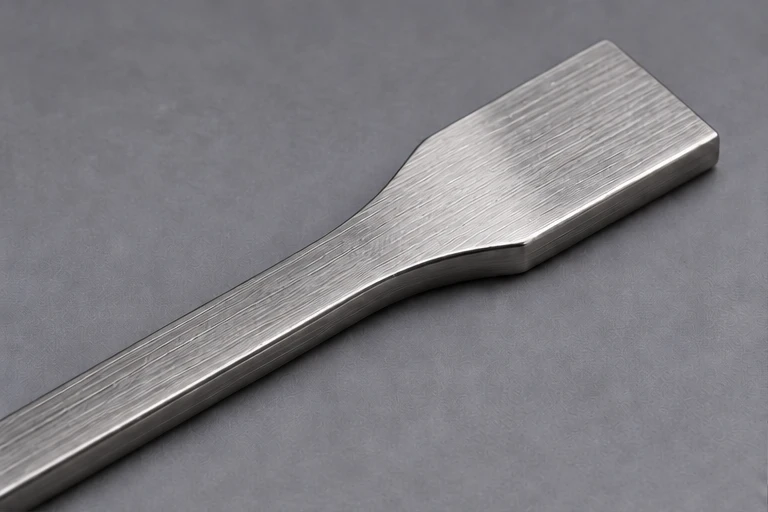
We confirm suitability based on the material, geometry and requirements.